Friday, September 14, 2018

ECKHART TOLLE - A FOREIGNER STEEPED IN INDIAN TRADITION


The following are 6 key mindfulness practices outlined by Eckhart Tolle in “The Power of Now”

1. "WATCHING THE THINKER" - START LISTENING TO THE VOICE IN YOUR HEAD AS OFTEN AS YOU CAN.
Pay particular attention to any repetitive thought patterns, those old audiotapes that have been playing in your head perhaps for many years.
2. FOCUS  YOUR  ATTENTION  INTO  THE  NOW
You can also create a gap in the mind stream simply by directing the focus of your attention into the Now. Just become intensely conscious of the present moment. There is one certain criterion by which you can measure your success in this practice: And that is the degree of peace that you feel within.
3. LOOK AT YOUR EMOTIONS: THE BODY'S REACTION  TO  YOUR  MIND
The more you are identified with your thinking, your likes and dislikes, judgments and interpretations, which is to say the less present you are as the watching consciousness, the stronger the emotional energy charge will be, whether you are aware of it or not.
4. WATCH OUT FOR ANY KIND OF DEFENSIVENESS WITHIN YOURSELF.
What are you defending? An illusory identity, an image in your mind, a fictitious entity. By making this pattern conscious, by witnessing it, you un-identify from it. In the light of your consciousness, the unconscious pattern will then quickly dissolve.
5. END  THE  DELUSION  OF  TIME + LETTING GO  OF  PSYCHOLOGICAL  TIME
End the delusion of time. Time and mind are inseparable. Remove time from the mind and it stops - unless you choose to use it. To be identified with your mind is to be trapped in time: The compulsion to live almost exclusively through memory and anticipation. Step out of the time dimension as much as possible in everyday life. If you find it hard to enter the Now directly, start by observing the habitual tendency of your mind to want to escape from the Now. Notice also how often your attention is in the past or future.
6.  CONNECTING  WITH  THE  INNER  BODY
Direct your attention into the body. Feel it from within. Is it alive? Is there life in your hands, arms, legs, and feet - in your abdomen, your chest? Can you feel the subtle energy field that pervades the entire body and gives vibrant life to every organ and every cell? Can you feel it simultaneously in all parts of the body as a single field of energy? Keep focusing on the feeling of your inner body for a few moments. Do not start to think about it. Feel it. When your consciousness is directed outward, mind and world arise. When it is directed inward, it realizes its own Source and returns home into the Unmanifested. As you go about your life, don't give 100 percent of your attention to the external world and to your mind. Keep some within.
FREEING YOURSELF FROM YOUR MIND
HOW TO  PRACTISE  THE  POWER  OF  NOW?
1. "WATCHING THE THINKER" - START LISTENING TO THE VOICE IN YOUR HEAD AS OFTEN AS YOU CAN.
Pay particular attention to any repetitive thought patterns, those old audiotapes that have been playing in your head perhaps for many years. This is what I mean by "watching the thinker," which is another way of saying: Listen to the voice in your head, be there as the witnessing presence. When you listen to that voice, listen to it impartially. That is to say, do not judge. Do not judge or condemn what you hear, for doing so would mean that the same voice has come in again through the back door. You'll soon realize: There is the voice, and here I am listening to it, watching it. This I AM realization, this sense of your own presence, is not a thought. It arises from beyond the mind. So when you listen to a thought, you are aware not only of the thought but also of yourself as the witness of the thought. A new dimension of consciousness has come in. As you listen to the thought, you feel a conscious presence - your deeper self - behind or underneath the thought, as it were. The thought then loses its power over you and quickly subsides, because you are no longer energizing the mind through identification with it. Every time you create a gap in the stream of mind, the light of your consciousness grows stronger. 
• This is the beginning of the end of involuntary and compulsive thinking. 
• When a thought subsides, you experience a discontinuity in the mental stream - a gap of "no-mind." 
• At first, the gaps will be short, a few seconds perhaps, but gradually they will become longer. When these gaps occur, you feel a certain stillness and peace inside you. 
• This is the beginning of your natural state of felt oneness with Being, which is usually obscured by the mind. • With practice, the sense of stillness and peace will deepen. In fact, there is no end to its depth.
• You will also feel a subtle emanation of joy arising from deep within: the joy of Being.
• In this state of inner connectedness, you are much more alert, more awake than in the mind-identified state. You are fully present.
• It also raises the vibrational frequency of the energy field that gives life to the physical body.
• As you go more deeply into this realm of no-mind, as it is sometimes called in the East, you realize the state of pure consciousness. • In that state, you feel your own presence with such intensity and such joy that all thinking, all emotions, your physical body, as well as the whole external world become relatively insignificant in comparison to it. • And yet this is not a selfish but a selfless state. It takes you beyond what you previously thought of as "your self." • That presence is essentially you and at the same time inconceivably greater than you.
2. FOCUS  YOUR  ATTENTION  INTO  THE  NOW
You can also create a gap in the mind stream simply by directing the focus of your attention into the Now. Just become intensely conscious of the present moment. This is a deeply satisfying thing to do. In this way, you draw consciousness away from mind activity and create a gap of no-mind in which you are highly alert and aware but not thinking. This is the essence of meditation. In your everyday life, you can practice this by taking any routine activity that normally is only a means to an end and giving it 'your fullest attention, so that it becomes an end in itself. For example, every time you walk up and down the stairs in your house or place of work, pay close attention to every step, every movement, even your breathing. Be totally present. Or when you wash your hands, pay attention to all the sense perceptions associated with the activity: the sound and feel of the water, the movement of your hands, the scent of the soap, and so on. Or when you get into your car, after you close the door, pause for a few seconds and observe the flow of your breath. Become aware of a silent but powerful sense of presence. One day you may catch yourself smiling at the voice in your head, as you would smile at the antics of a child. This means that you no longer take the content of your mind all that seriously, as your sense of self does not depend on it. The single most vital step on your journey toward enlightenment is this: Learn to un-identify from your mind.
3. LOOK AT YOUR EMOTION : THE BODY'S REACTION  TO  YOUR  MIND
Mind, in the way I use the word, is not just thought. It includes your emotions as well as all unconscious mental-emotional reactive patterns. Emotion arises at the place where mind and body meet. It is the body's reaction to your mind - or you might say a reflection of your mind in the body. The more you are identified with your thinking, your likes and dislikes, judgments and interpretations, which is to say the less present you are as the watching consciousness, the stronger the emotional energy charge will be, whether you are aware of it or not. There is one certain criterion by which you can measure your success in this practice: And that is the degree of peace that you feel within. If you cannot feel your emotions, if you are cut off from them, you will eventually experience them on a purely physical level, as a physical problem or symptom. If you have difficulty feeling your emotions, start by focusing attention on the inner energy field of your body. Feel the body from within. This will also put you in touch with your emotions. If you really want to know your mind, the body will always give you a truthful reflection, so look at the emotion, or rather feel it in your body. If there is an apparent conflict between them, the thought will be the lie, the emotion will be the truth. Not the ultimate truth of who you are, but the relative truth of your state of mind at that time. You may not yet be able to bring your unconscious mind activity into awareness as thoughts, but it will always be reflected in the body as an emotion, and of this you can become aware. To watch an emotion in this way is basically the same as listening to or watching a thought, which I described earlier. The only difference is that, while a thought is in your head, an emotion has a strong physical component and so is primarily felt in the body. You can then allow the emotion to be there without being controlled by it. You no longer are the emotion; you are the watcher, the observing presence. If you practice this, all that is unconscious in you will be brought into the light of consciousness. That question will point you in the right direction. But don't analyze, just watch. Focus your attention within. Feel the energy of the emotion If there is no emotion present, take your attention more deeply into the inner energy field of your body. It is the doorway into Being. MAKE IT A HABIT TO ASK YOURSELF: What's going on inside me at this moment?
4. WATCH OUT FOR ANY KIND OF DEFENSIVENESS WITHIN YOURSELF.
What are you defending? An illusory identity, an image in your mind, a fictitious entity. By making this pattern conscious, by witnessing it, you un-identify from it. In the light of your consciousness, the unconscious pattern will then quickly dissolve. This is the end of all arguments and power games, which are so corrosive to relationships. Power over others is weakness disguised as strength. True power is within, and it is available to you now. The mind always seeks to deny the Now and to escape from it. The more you are identified with your mind, the more you suffer. Or you may put it like this: The more you are able to honor and accept the Now, the more you are free of pain, of suffering - and free of the ego mind.
5. END  THE  DELUSION  OF  TIME + LETTING  GO  OF  PSYCHOLOGICAL  TIME
If you no longer want to create pain for yourself and others, if you no longer want to add to the residue of past pain that still lives on in you, then don't create any more time, or at least no more than is necessary to deal with the practical aspects of your life. How to stop creating time? End the delusion of time. Time and mind are inseparable. Remove time from the mind and it stops - unless you choose to use it. This creates an endless preoccupation with past and future and an unwillingness to honor and acknowledge the present moment and allow it to be. The compulsion arises because the past gives you an identity and the future holds the promise of salvation, of fulfillment in whatever form. Both are illusions. The more you are focused on time - past and future - the more you miss the Now, the most precious thing there is. Why is it the most precious thing? Firstly, because it is the only thing. It's all there is. The eternal present is the space within which your whole life unfolds, the one factor that remains constant. Life is now. There was never a time when your life was not now, nor will there ever be. Secondly, the Now is the only point that can take you beyond the limited confines of the mind. It is your only point of access into the timeless and formless realm of Being.
Have you ever experienced, done, thought, or felt anything outside the Now? Do you think you ever will? Is it possible for anything to happen or be outside the Now? The answer is obvious, is it not? Nothing ever happened in the past; it happened in the Now. Nothing will ever happen in the future; it will happen in the Now. The essence of what I am saying here cannot be understood by the mind. The moment you grasp it, there is a shift in consciousness from mind to Being, from time to presence. Suddenly, everything feels alive, radiates energy, emanates Being. Break the old pattern of present-moment denial and present-moment resistance. Make it your practice to withdraw attention from past and future whenever they are not needed. Step out of the time dimension as much as possible in everyday life. If you find it hard to enter the Now directly, start by observing the habitual tendency of your mind to want to escape from the Now. You will observe that the future is usually imagined as either better or worse than the present. If the imagined future is better, it gives you hope or pleasurable anticipation. If it is worse, it creates anxiety. Both are illusory. Whenever you are able to observe your mind, you are no longer trapped in it. Another factor has come in, something that is not of the mind: the witnessing presence. Be present as the watcher of your mind - of your thoughts and emotions as well as your reactions in various situations. Be at least as interested in your reactions as in the situation or person that causes you to react. Notice also how often your attention is in the past or future. To be identified with your mind is to be trapped in time: The compulsion to live almost exclusively through memory and anticipation. Don't judge or analyze what you observe. Watch the thought, feel the emotion, observe the reaction. Don't make a personal problem out of them. You will then feel something more powerful than any of those things that you observe: the still, observing presence itself behind the content of your mind, the silent watcher. Intense presence is needed when certain situations trigger a reaction with a strong emotional charge, such as when your self-image is threatened, a challenge comes into your life that triggers fear, things "go wrong," or an emotional complex from the past is brought up. In those instances, the tendency is for you to become "unconscious." The reaction or emotion takes you over - you "become" it. You act it out. You justify, make wrong, attack, defend ... except that it isn't you, it's the reactive pattern, the mind in its habitual survival mode.
Identification with the mind gives it more energy; observation of the mind withdraws energy from it., Identification with the mind creates more time; observation of the mind opens up the dimension of the timeless. The energy that is withdrawn from the mind turns into presence. Once you can feel what it means to be present, it becomes much easier to simply choose to step out of the time dimension whenever time is not needed for practical purposes and move more deeply into the Now. This does not impair your ability to use time - past or future - when you need to refer to it for practical matters. Nor does it impair your ability to use your mind. In fact, it enhances it. When you do use your mind, it will be sharper, more focused. Learn to use time in the practical aspects of your life - we may call this "clock time" - but immediately return to present-moment awareness when those practical matters have been dealt with. In this way, there will be no buildup of "psychological time," which is identification with the past and continuous compulsive projection into the future. The enlightened person's main focus of attention is always the Now The enlightened person's main focus of attention is always the Now, but they are still peripherally aware of time. In other words, they continue to use clock time but are free of psychological
6.  CONNECTING  WITH  THE  INNER  BODY
You may find it helpful to close your eyes for this practice. Later on, when "being in the body" has become natural and easy, this will no longer be necessary. Direct your attention into the body. Feel it from within. Is it alive? Is there life in your hands, arms, legs, and feet - in your abdomen, your chest? Can you feel the subtle energy field that pervades the entire body and gives vibrant life to every organ and every cell? Can you feel it simultaneously in all parts of the body as a single field of energy? Keep focusing on the feeling of your inner body for a few moments. Do not start to think about it. Feel it. The more attention you give it, the clearer and stronger this feeling will become. It will feel as if every cell is becoming more alive, and if you have a strong visual sense, you may get an image of your body becoming luminous. Although such an image can help you temporarily, pay more attention to the feeling than to any image that may arise. An image, no matter how beautiful or powerful, is already defined in form, so there is less scope for penetrating more deeply. To go even more deeply into the body, try the following meditation. Ten to fifteen minutes of clock time should be sufficient. Make sure first that there are no external distractions such as telephones or people who are likely to interrupt you. Sit on a chair, but don't lean back. Keep the spine erect. Doing so will help you to stay alert. Alternatively, choose your own favorite position for meditation. Make sure the body is relaxed. Close your eyes. Take a few deep breaths. Feel yourself breathing into the lower abdomen, as it were. Observe how it expands and contracts slightly with each in and out breath. Then become aware of the entire inner energy field of the body. Don't think about it - feel it. By doing this, you reclaim consciousness from the mind. If you find it helpful, use the "light" visualization I just described. When you can feel the inner body clearly as a single field of energy, let go, if possible, of any visual image and focus exclusively on the feeling. If you can, also drop any mental image you may still have of the physical body. All that is left then is an all-encompassing sense of presence or "beingness," and the inner body is felt to be without a boundary. ' Through self-observation, more presence comes into your life automatically. The moment you realize you are not present, you are present. Then take your attention even more deeply into that feeling. Become one with it. Merge with the energy field, so that there is no longer a perceived duality of the observer and the observed, of you and your body. The distinction between inner and outer also dissolves now, so there is no inner body anymore. By going deeply into the body, you have transcended the body. Stay in this realm of pure Being for as long as feels comfortable; then become aware again of the physical body, your breathing and physical senses, and open your eyes. Look at your surroundings for a few minutes in a meditative way - that is, without labeling them mentally - and continue to feel the inner body as you do so. Having access to that formless realm is truly liberating. It frees you from bondage to form and identification with form. We may call it the Unmanifested, the invisible Source of all things, the Being within all beings. It is a realm of deep stillness and peace, but also of joy and intense aliveness. Whenever you are present, you become "transparent" to some extent to the light, the pure consciousness that emanates from this Source. You also realize that the light is not separate from who you are but constitutes your very essence. When your consciousness is directed outward, mind and world arise. When it is directed inward, it realizes its own Source and returns home into the Unmanifested. It is quite possible to be conscious of the Unmanifested throughout your life. You feel it as a deep sense of peace somewhere in the background, a stillness that never leaves you, no matter what happens out here. You become a bridge between the Unmanifested and the manifested, between God and the world. THIS IS THE STATE OF CONNECTEDNESS WITH THE SOURCE THAT WE CALL ENLIGHTENMENT. Then, when your consciousness comes back to the manifested world, you reassume the form identity that you temporarily relinquished. You have a name, a past, a life situation, a future. But in one essential respect, you are not the same person you were before: You will have glimpsed a reality within yourself that is not "of FREEING YOURSELF FROM YOUR MIND this world," although it isn't separate from it, just as it isn't separate from you. Now let your spiritual practice be this: As you go about your life, don't give 100 percent of your attention to the external world and to your mind. Keep some within. Feel the inner body even when engaged in everyday activities, especially when engaged in relationships or when you are relating with nature. Feel the stillness deep inside it. Keep the portal open. Creative use of mind If you need to use your mind for a specific purpose, use it in conjunction with your inner body. Only if you are able to be conscious without thought can you use your mind creatively, and the easiest way to enter that state is through your body. Whenever an answer, a solution, or a creative idea is needed, stop thinking for a moment by focusing attention on your inner energy field. Become aware of the stillness. When you resume thinking, it will be fresh and creative. In any thought activity, make it a habit to go back and forth every few minutes or so between thinking and an inner kind of listening, an inner stillness. Don't just think with your head, think with your whole body. Let the breath take you into the body. If at any time you are finding it hard to get in touch with the inner body, it is usually easier to focus on your breathing first. Conscious breathing, which is a powerful meditation in its own right, will gradually put you in touch with the body. Follow the breath with your attention as it moves in and out of your body. Breathe into the body, and feel your abdomen expanding and contracting slightly with each inhalation and exhalation. If you find it easy to visualize, close your eyes and see yourself surrounded by light or immersed in a luminous substance - a sea of consciousness. Then breathe in that light. Feel that luminous substance filling up your body and making it luminous also. Then gradually focus more on the feeling. Don't get attached to any visual image. You are now in your body. You have accessed the power of Now.EC


LINKS SO FAR


RARE BOOKS

INTRODUCTION TO THE VEDAS

OSHO.


SAUBASH CHANDRA BOSE - FREEDOM FIGHTER TO THE CORE


Subhash Chandra Bose’s father wanted him to become a civil servant and therefore, sent him to England to appear for the Indian Civil Service Examination. Bose was placed fourth with highest marks in English. But his urge for participating in the freedom movement was intense that in April 1921, Bose resigned from the coveted Indian Civil Service and came back to India. Soon, he left home to become an active member of India’s independence movement. He, later joined the Indian National Congress, and also elected as the president of the Youth wing party.

Subhash  Chandra  Bose with Congress
Subhash Chandra Bose worked under the leadership of Chittaranjan Das, an active member of Congress in Calcutta. It was Chittaranjan Das, who along with Motilal Nehru, left Congress and founded the Swaraj Party in 1922. Subhash would regard Chittaranjan Das as his political guru. While Chittaranjan Das was busy in developing the national strategy, Subhash Chandra Bose played a major role in enlightening the students, youth and labourers of Calcutta. He was eagerly waiting to see India, as an independent, federal and republic nation.
Subhash  Chandra Bose Vs. Congress
In freedom struggle congress was large organisation. Subhash Chandra Bose became a strong leader in Congress and he made brave attempt to mould the entire party differently. Congress party was always lenient and never in a position to oppose. Saubhashbabu outrightly opposed this behaviour. This opposition was against Gandhi‘s philosophy. Therefore Mahatma Gandhi and other leaders were hurt and since then they opposed him. Congress party had undertaken a mission of opposing his every thought, insulting him and to stifle his highflying ambitions. In this manoeuvre of congress many a time he felt suffocated. Once there was a picture of ‘Subhash Chandra Bose against entire congress party’. It was first election of congress that time. Usually closer aide of Mahatma Gandhi used to get elected; but this time Subhash Chandra Bose got elected with higher votes. This insulted Gandhi group, which lead to their less interest of thinking towards parties campaign for independence. In order to acknowledge outside support and get freedom he journeyed to far away Germany, Japan when it was period of 2nd world war! He decided to induce soldiers from outside to get freedom. Nehru at that time said “If Subhash would bring soldiers from outside and enter India, then I would be the first person to wield a sword and oppose him.” That was the extent to which he detested  Subhash  babu.
Formation of Azad Hind Fauj by Subhash Chandra Bose
Netaji with Azad Hind Fauj
Netaji Subhash Chandra Bose was against rendering any kind of help to the British during the World War II. He warned them so. The second World War broke out in September of 1939, and just as predicted by Bose, India was declared as a warring state (on behalf of the  British) by the Governor General, without consulting Indian leaders. The Congress party was in power in seven major states and all state governments resigned in protest.
Subhash Chandra Bose now started a mass movement against utilizing Indian resources and men for the great war. To him, it made no sense  to further bleed  poor Indians for the sake of colonial and imperial nations.  There was a tremendous response to his call and the British promptly imprisoned him . He took to a hunger-strike, and after his health deteriorated on the 11th day of fasting, he was freed and was placed under house arrest. The British could do nothing except locking him in the prison. It was in 1941, that Subhash Chandra Bose suddenly disappeared. The authorities did not come to know for many days that he was not in his Barrack (the house in which he was being guarded). He traveled by foot, car and train and resurfaced in Kabul (now in Afghanistan), only to disappear once again.  In November 1941, his broadcast from German radio sent shock waves among the British and electrified the Indian masses who realized that their leader was working on a master plan to free their motherland. It also gave fresh confidence to the revolutionaries in India who were challenging the British in many ways. The Axis powers (mainly Germany) assured Netaji Subhash Chandra Bose military and other help to fight the British. Japan by this time had grown into another strong world power, occupying key colonies of Dutch, French, and British colonies in Asia. Netaji Bose had struck alliance with Germany and Japan. He rightly felt that his presence in the East would help his countrymen in freedom struggle and second phase of his saga began. It is told that he was last seen on land near Kiel canal in Germany, in the beginning of 1943. A most hazardous journey was undertaken by him under water, covering thousands of miles,  crossing enemy territories. He was in the Atlantic, the Middle East, Madagascar and the Indian ocean. Battles were being fought over land, in the air and there were mines in the sea. At one stage he traveled 400 miles in a rubber dingy to reach a Japanese submarine, which took him to Tokyo. He was warmly received in Japan and was declared the head of the Indian army, which consisted of  about 40,000 soldiers from Singapore and other eastern regions. These soldiers were united by another great revolutionary Rash Behari Bose. Rash Behari handed over them to Netaji Subhash Chandra Bose. Netaji Bose called it the Indian National Army (INA) and a government by the name “Azad Hind Government”  was declared on the 21st of October 1943. INA freed the Andaman and Nicobar islands from the British and were renamed as Swaraj and Shaheed islands. 
The Government started  functioning.
Subhash Chandra Bose wanted to free India from the Eastern front. He had taken care that Japanese interference was not present from any angle. Army leadership, administration and communications were managed by Indians only. Subhash Brigade, Azad Brigade and Gandhi Brigade were formed. INA marched through Burma and occupied Coxtown on the Indian Border. A touching scene ensued when the solders entered their ‘free’ motherland. Some lay down and kissed, some placed pieces of  mother earth on their heads, others wept. They were now inside India and were determined to drive out the British! Delhi Chalo (Let’s march to Delhi) was the war cry. The bombing of Hiroshima and Nagasaki changed the history of mankind. Japan had to surrender.
Effect of Netaji Subhash Chandra Bose’s earlier visits to England
During his sojourn to England, he met with the leaders of British Labor Party and political thinkers including Clement Attlee, Arthur Greenwood, Harold Laski, G.D.H. Cole, and Sir Stafford Cripps. Bose also discuss with them about the future of India. It must also be noted that it was during the regime of the Labor Party (1945-1951), with Attlee as the Prime Minister, that India gained independence.
Disappearance of Subhash Chandra Bose
Although it was believed that Netaji Subhash Chandra Bose died in a plane crash, his body was never recovered. There have been many theories put forward regarding his disappearance. The government of India set up a number of committees to investigate the case and come out with truth. In May 1956, the Shah Nawaz Committee visited Japan to look into the situation of Bose’s assumed death. Citing their lack of political relations with Taiwan, the Centre, did not seek for the assistance from their government. The reports of Justice Mukherjee Commission, tabled in Parliament on 17 May, 2006 said, “Bose did not die in the plane crash and the ashes at Renkoji temple are not his”. However, the findings were rejected by the government of India.

Wednesday, August 15, 2018

TENETS OF LORD MAHAVIR


Five Great Vows
At the heart of right-conduct, lie the five great vows: 
Ahimsa (Non-violence):
To abstain from causing harm to any living being.
Satya (Truthfulness):
To speak only the innocuous truth.
Achaurya (Non-stealing):
To refrain from taking anything without the permission of its owner.
Brahmacharya (Celibacy):
Abstinence from sexual indulgence.
Aparigraha (Non-possessiveness):
To abstain from having possessions and possessiveness towards anything.
These five vows must be strictly observed by Jain monks and nuns in their entirety.
However, partial observance of these vows has also been formally laid down for householders, with seven additional vows.
These enable the gradual and smooth progress of the soul on the path of liberation leading to moksh. 
The Four-Fold Order (Chaturvidh Sangh)
For the perpetuance and protection of the Jain religion, as well as to ensure its accessibility to all, Bhagwan Mahavira established the four-fold order. The four constituents of this order are monks, nuns, laymen and laywomen - serving as the four fundamental supporting pillars of the religious organisation, their responsibility being to maintain its vibrancy. In order to firmly establish the glory of the four-fold order, He Himself saluted it with the words, 'namo titthasa'. 
Bhagwan Mahavira had eleven  gandhars (chief disciples). Nine gandhars attained liberation during His lifetime, while the other two - Gautamswami and Sudharmaswami, survived Him.
The responsibility of piloting and protecting the four-fold order fell on the shoulders of Sudharmaswami, the fifth main disciple of Bhagwan Mahavira. The genealogy of Bhagwan Mahavira, therefore, starts with Him as the first and the foremost leader of the four-fold order. 
Jambuswami, a disciple of Sudharmaswami, was the last kevali  (omniscient)  of  this  era. After Jambuswami, the responsibility of leading the four-fold order was borne by the great shrutkevalis (monks who had mastered the scriptures), brilliant acharyas (illustrious torchbearers) and others.
This ensured the continuity of the four-fold order, and this lineage has been uninterruptedly sustained from Bhagwan Mahavira to the present day.
The Scriptures (Agams)
Universal love was the gospel that Bhagwan Mahavira preached – spreading the message of liberation and eternal happiness.
He made religion simple and natural, freed it from complexities.
His teachings were compiled and transmitted to posterity in the form of Agams (Jain canons) by the gandhars (chief disciples). Today, in all, 45  Agams  are available. These canonical texts serve as the guiding light for aspirants along the path of self-realisation. They are instrumental in liberating souls from the miseries of the cycles of birth and death.
The Eleven Angas: 
Acharanga Sutra,
Sutrakratanga Sutra,
Sthananga Sutra,
Samavayanga Sutra,
Vyakhya Prajnaptyanga or Bhagavati Sutra,
Jnata Dharma Kathanga Sutra,
Upasaka Dashanga Sutra,
Antah Kruddashanga Sutra,
Anuttaraupa Patika Dashanga Sutra,
Prashna Vyakrananga Sutra,
Vipakasutranga
Twelve Upangas: 
Aupapatika Sutra,
Raja Prashniya Sutra,
Jivabhigama Sutra,
Prajnapana Sutra,
Surya Prajnapti Sutra,
Chandra Prajnapti Sutra,
Jambudveepa Prajnapti Sutra,
Nirayarvali Sutra,
Kalpa Vatansika Sutra,
Pushpika Sutra,
Pushpa Chulika Sutra,
Vrushnidasha Sutra
Ten Prakirnas: 
Chatuh Sharana,
Aatura Pratyakhyana,
Bhakta Parijna,
Sanstaraka,
Tandulavaitalika,
Chandra Vedhyaka,
Devendra Stava,
Gani Vidya,
Mahapratyakhyana, Veerastava 
Six Chheda Sutras: 
Nisheetha Sutra,
Mahanisheetha Sutra,
Vyavahara Sutra,
Dasha Shruta Skandha Sutra or Acharadasas,
Panch Kalpa Sutra,
Bruhat Kalpa Sutra
Four Mool-Sutras: 
Avashyaka Sutra,
Dasha Vaikalika Sutra,
Uttaradhyayana Sutra,
Ogha Niryukti or Pinda Niryukti Sutra
Two Chulika Sutras: 
Nandi Sutra,
Anuyogadvara Sutra 
Main sects (Sampraday)
In the past 2500 years, since the nirvan of Bhagwan Mahavira, Jainism has had an impressive genealogy, creating a rich legacy of eminent leaders and a powerful organisation which guarded its integrity and maintained its significance for posterity. The great personages leading the four-fold order have glorified the Jain tradition, raising it to a lofty position and propagating it far and wide.
Since Bhagwan Mahavira's times, to the present day, several sects have emerged in Jainism–
Shwetambar  (White clad) and  Digambar  (Sky clad) being the two main sects.
In due course, the Shwetambar sect was further divided into three sub-sects:
(a) Murtipujaks  (Idol worshippers)
(b) Sthanakvasis  (Non idol worshippers) and
(c) Terapanthis.
In the present times, these three sects and the Digambars, together constitute the four main sects of Jainism.
Shwetambar (White clad):
(a) Murtipujak (Idol worshippers): 
As the name suggests, this sect believes in idol worship of Bhagwan. Faithfully accepting and respecting the 45 Agams, followers of this sect believe in equality of men and women when it comes to worship and spiritual endeavours. The monks of this sect don white clothes.
(b) Sthanakvasi (Non idol worshippers): 
Amongst the Shwetambars, there were some who did not believe in idol-worship.
A separate sect called Sthankvasi was created in V.S. 1508, founded by Lonkashah. Out of the 45 Agams he accepted only those 32 Agams which did not have any reference to idol worship.
(c) Terapanthi: 
About 200 years after the  Sthanakvasi  sect was formed, some followers bifurcated into a separate sect, called Terapanth. Believed to have been founded by Sadhu Bhikamji, Terapanthis  differ from the  Sthanakavasis in  their views on the principles of mercy and charity.
Digambar (Sky clad):
As the name suggests, they are sky-clad, that is, the monks of this sect refrain from all possessions, even clothes. Followers of this sect do not accept any of the Agams of the Shwetambars and believe that women cannot attain liberation.


Monday, August 13, 2018

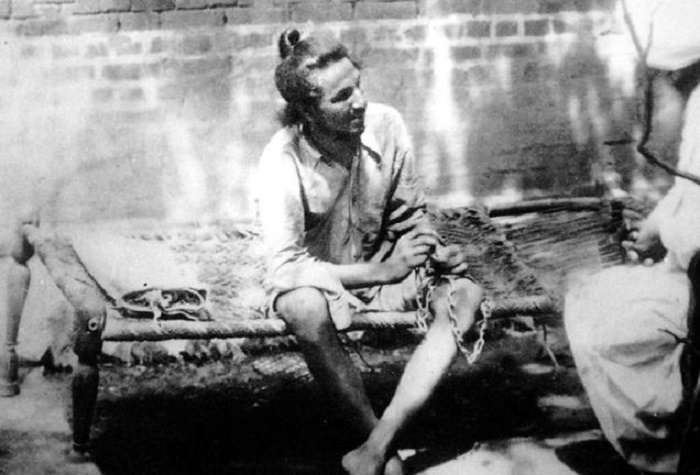
BHAGAT SINGH - SACRIFICE FOR A CORRUPT NATION


Born: September 27, 1907 
Place of Birth: Village Banga, Tehshil Jaranwala, District Lyallpur, Punjab (in modern day Pakistan)
Parents: Kishan Singh (father) and Vidyavati Kaur (mother)
Education: D.A.V. High School, Lahore; National College, Lahore 
Associations: Naujawan Bharat Sabha, Hindustan Republican Association, Kirti Kisan Party, Kranti Dal.
Political Ideology: Socialism; Nationalism; Anarchism; Communism
Religious Beliefs: Sikhism (childhood and teen); Atheism (youth)
Publications: Why I Am An Atheist: An Autobiographical Discourse, The Jail Notebook And Other Writings, Ideas of a Nation 
Death: Executed on March 23, 1931
Memorial: The National Martyrs Memorial, Hussainwala, Punjab
Bhagat Singh is considered to be one of the most influential revolutionaries of Indian Nationalist Movement. He became involved with numerous revolutionary organizations and played an important role in the Indian National movement. He died a martyr at the age of just 23 years. Following his execution, on March 23, 1931, the supporters and followers of Bhagat Singh regarded him as a "Shaheed" (martyr).
Childhood and Early Life
Bhagat Singh was born on 27 September 1907 at Banga in Lyallpur district (now Pakistan) to Kishan Singh and Vidyavati. At the time of his birth, his father Kishan Singh, uncles Ajit and Swaran Singh were in jail for demonstrations against the Colonization Bill implemented in 1906. His uncle, Sardar Ajit Singh, was a proponent of the movement and established the Indian Patriots' Association. He was well-supported by his friend Syed Haidar Raza in organizing the peasants against the Chenab Canal Colony Bill. Ajit Singh had 22 cases against him and was forced to flee to Iran. His family was the supporter of the Ghadar party and the politically aware environment at home helped incite a sense of patriotism in the heart of young Bhagat Singh.
Bhagat Singh studied till the fifth class in his village school, after which his father Kishan Singh got him enrolled at the Dayanand Anglo Vedic High School in Lahore. At a very young age, Bhagat Singh started following Non-Cooperation Movement, initiated by Mahatma Gandhi. Bhagat Singh had openly defied the British and had followed Gandhi's wishes by burning the government-sponsored books. He even left the school to enrol at the National College in Lahore. Two incidents during his teen days shaped his strong patriotic outlook - the Jallianwala Bagh Massacre in 1919 and killing of unarmed Akali protesters at the Nankana Sahib in 1921. His family believed in the Gandhian ideology of non-violent approach to attain Swaraj and for a while Bhagat Singh also supported the Indian National Congress and the causes behind the Non-Cooperation Movement. Following the Chauri Chaura Incident, Gandhi called for the withdrawal of the Non-Cooperation movement. Unhappy with the decision, Bhagat Singh, isolated himself from Gandhi's nonviolent action and joined the Young Revolutionary Movement. Thus began his journey as the most prominent advocate of violent insurgency against the British Raj.
He was pursuing B.A. examination when his parents planned to have him married. He vehemently rejected the suggestion and said that, if his marriage was to take place in Slave-India, my bride shall be only death."
In March 1925, inspired by European nationalist movements, the Naujawan Bharat Sabha was formed with Bhagat Singh, as its secretary. Bhagat singh also joined the Hindustan Republican Association (HRA), a radical group, which he later rechristened as the Hindustan Socialist Republican Association (HSRA) along with fellow revolutionaries Chandrashekhar Azad and Sukhdev. He returned to his home in Lahore after assurances from his parents that he would not be compelled to get married. He established contact with the members of the Kirti Kisan Party and started contributing regularly to its magazine, the "Kirti". As a student, Bhagat Singh was an avid reader and he would read up about European nationalist movements. Inspired by the writings of Friedrich Engels and Karl Marx, his political ideologies took shape and he became more inclined towards a socialist approach. He also wrote in newspapers like “Veer Arjun” "under several pseudonyms.
National Movement & Revolutionary Activities 
Initially, Bhagat Singh’s activities were limited to writing corrosive articles against the British Government, printing and distributing pamphlets outlining principles of a violent uprising, aimed at overthrowing the Government. Considering his influence on the youth, and his association with the Akali movement, he became a person of interest for the government.The police arrested him in a bombing case that took place in 1926 in Lahore. He was released 5 months later on a 60,000 rupees bond. 
On 30 October 1928, Lala Lajpat Rai led an all-parties procession and marched towards the Lahore railway station to protest against the arrival of the Simon Commission. The police resorted to a brutal lathi charge to thwart the advancement of the protesters. The confrontation left Lala Lajpat Rai with severe injuries and he succumbed to his injuries on November17, 1928. As a revenge for the death of Lala Lajpat Rai, Bhagat Singh and his associates plotted the assassination of James A. Scott, the Superintendent of Police, believed to have ordered the lathi charge. The revolutionaries, mistaking J.P. Saunders, an Assistant Superintendent of Police, as Scott, killed him instead. Bhagat Singh quickly left Lahore to escape his arrest. To avoid recognition, he shaved his beard and cut his hair, a violation of the sacred tenets of Sikhism.
In response to the formulation of Defence of India Act, the Hindustan Socialist Republican Association planned to explode a bomb inside the assembly premises, where the ordinance was going to be passed. On April 8 1929, Bhagat Singh and Batukeshwar Dutt threw a bomb onto the corridors of the assembly, shouted 'Inquilab Zindabad!' and threw pamphlet outlining their missive into the air. The bomb was not meant to kill or injure anyone and therefore it was thrown away from the crowded place, but still several council members were injured in the commotion. Following the blasts both Bhagat Singh and Batukeshwar Dutt courted arrest.
1929 Assembly Incident Trial
The dramatic demonstration of protest was met with widespread criticisms from the political arena. Singh responded – “Force when aggressively applied is 'violence' and is, therefore, morally unjustifiable, but when it is used in the furtherance of a legitimate cause, it has its moral justification.”
Trial proceedings commenced in May where Singh sought to defend himself, while Batukeshwar Dutt was represented by Afsar Ali. The court ruled in favour of a life sentence citing malicious and unlawful intent of the explosions.
Lahore Conspiracy Case & Trial
Soon after the sentencing, the police raided the HSRA bomb factories in Lahore and arrested several prominent revolutionaries.Three individuals, Hans Raj Vohra, Jai Gopal and Phanindra Nath Ghosh turned approver for the Government which led to a total of 21 arrests including those of Sukhdev, Jatindra Nath Das and Rajguru. Bhagat Singh was re-arrested for the Lahore Conspiracy case, murder of Assistant Superintendent Saunders and bomb manufacturing.
Trial started against 28 accused in a special session court presided over by Judge Rai Sahib Pandit Sri Kishen, on July10, 1929.
Meanwhile, Singh and his fellow inmates declared an indefinite hunger strike in protest of the prejudiced difference in treatment of the white versus native prisoners and demanded to be recognised as ‘political prisoners’. The hunger strike received tremendous attention from the press and gathered major public support in favour of their demands. Death of Jatindra Nath Das, after 63 days long fast, led to the negative public opinions intensifying towards the authorities. Bhagat Singh finally broke his 116-day fast, on request of his father and Congress leadership, on October 5, 1929.
Owing to the slow pace of the legal proceedings, a special tribunal consisting of Justice J. Coldstream, Justice Agha Hyder and Justice G. C. Hilton was set up on the directives of the Viceroy, Lord Irwin on 1 May 1930. The tribunal was empowered to proceed without the presence of the accused and was a one-sided trial that hardly adhered to the normal legal rights guidelines. 
The tribunal delivered its 300-page judgement on 7 October 1930. It declared that irrefutable proof has been presented confirming the involvement of Singh, Sukhdev and Rajguru in the Saunders murder. Singh admitted to the murder and made statements against the British rule during the trial.  They were sentenced to be hanged till death.
Execution
On March 23, 1931, 7:30 am, Bhagat Singh was hanged in Lahore Jail with his comrades Rajguru and Sukhdev. It is said that the trio proceeded quite cheerfully towards the gallows while chanting their favourite slogans like “Inquilab Zindabad” and “Down with British Imperialism”. Singh and his peers were cremated at Hussainiwala on the banks of Sutlej River.
Bhagat Singh’s Thoughts & Opinions
From a very young age patriotism had taken its seed in Bhagat Singh’s conscience. He grew up to appreciate nationalism and crave a British-free independent India. Extensive reading of European literature propelled him towards forming a socialist outlook strongly desiring a democratic future for his beloved country. Although born a Sikh, Bhagat Singh veered towards Atheism after witnessing several Hindu-Muslim riots and other religious outbreaks. Singh believed that something as precious as Independence can only be achieved by a thorough cleansing of the exploitative nature of imperialism. He opined that such change can only be brought forwardby means of an armed revolution, in similar lines to the Bolshevik Revolution in Russia. He introduced the slogan “Inquilab Zindabad” which sort of transformed into the war cry of the Indian Independence movement.
Popularity & Legacy
Bhagat Singh, his intense patriotism coupled with cultivated idealism, made him an ideal icon for the youth of his generation. Through his written and vocal admonition of the British Imperial Government, he became the voice of his generation. His vehement departure from the Gandhian non-violent route to Swaraj has often been criticized by many, yet through the fearless embracing of martyrdom he inspired hundreds of teens and youths to join the freedom struggle wholeheartedly. His eminence in current times is evident from the fact that Bhagat Singh was voted as the Greatest Indian, ahead of Subhash Chandra Bose and Mahatma Gandhi, in a poll conducted by India Today in 2008.
Bhagat Singh in Popular Culture
The inspiration that Bhagat Singh still ignites within the soul of Indians can be felt in the popularity of the films and theatrical adaptations on his life. Several films like “Shaheed” (1965) and “The Legend of Bhagat Singh” (2002) were made on the life of 23-year old revolutionary. Popular songs like the “Mohe rang de basanti chola” and “Sarfaroshiki Tamanna” associated with Bhagat Singh are still relevant in inspiring patriotic emotions in the Indians. Numerous books, articles and papers have been written about his life, ideologies and legacy.